Story 01 · Tryweryn valley, Gwynedd
The village under the water
In December 1955 a Welsh-speaking farming community read in a newspaper that Liverpool wanted its valley. Ten years later the water arrived.
Chapter 1 · Before 1955
The valley
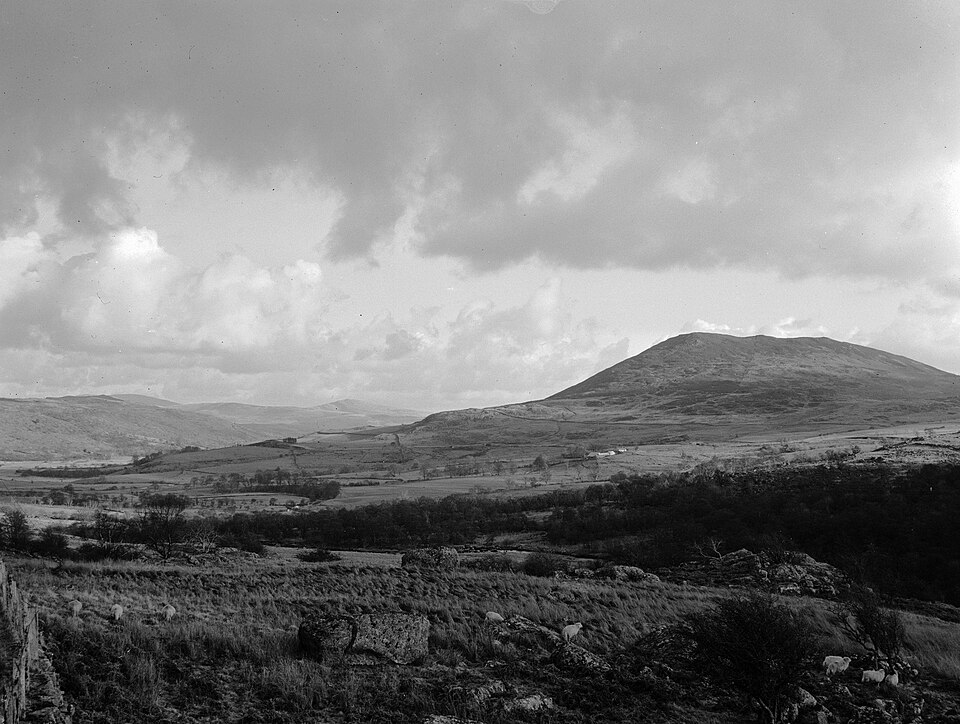
Capel Celyn means “chapel of the holly”. It lay in the valley of the Afon Tryweryn, between Bala and Blaenau Ffestiniog, and it was a farming community where almost everyone spoke Welsh. It had a chapel, a school, a post office, a cemetery and a scatter of farms with names like Moelfryn, Gwerndelwau and Glan Celyn.
It was not a place stuck in the past. By the 1950s some households had radios and televisions, and more properties were joining the electricity grid. The valley also had a longer history: many of the early Quakers who emigrated to Pennsylvania came from here, seeking freedom to worship.
The chapel had been built in 1820 and rebuilt in 1892.
Chapter 2 · 1955 to 1957
The decision
Liverpool had done this before. In the 1880s its Corporation built Lake Vyrnwy in Montgomeryshire, which drowned the village of Llanwddyn. By the 1950s it wanted more water for the city and for industry on both sides of the Mersey, and the Tryweryn was the obvious place.
On 20 December 1955 Liverpool Corporation resolved to put the scheme forward. Two days later the Liverpool Daily Post announced a big new dam near Bala. The villagers first heard of the plan from the newspaper. Compensation was offered, but only after the decision to flood had been made.
Because Liverpool took the matter to Parliament as a private bill, it did not need the consent of any Welsh planning authority. Wales then had no Welsh Office, which was only created in 1964, and no devolved government. The villagers marched to Liverpool twice in 1956. Liverpool councillors voted overwhelmingly to go ahead. The scheme was opposed by 125 local authorities.
In the Commons, 35 of the 36 Welsh MPs opposed the Bill. The 36th abstained. It passed in 1957 regardless, as the Liverpool Corporation Act. While the Bill was going through Parliament, Gwynfor Evans, who would later become Plaid Cymru’s first MP, described it as:
“part of the crippling penalty paid by a nation without a government.”Gwynfor Evans, 1957, quoted in the Commons in 2015
- 1820The chapel at Capel Celyn is built. It was rebuilt in 1892.
- 20 Dec 1955Liverpool Corporation resolves to put the scheme forward.
- 22 Dec 1955The Liverpool Daily Post announces a big new dam near Bala.
- 6 Jan 1956Gwynfor Evans publishes Save Cwm Tryweryn for Wales.
- 1956The villagers march to Liverpool twice.
- 1957The Liverpool Corporation Act passes.
Chapter 3 · 1956 to 1963
The fight
The villagers formed the Capel Celyn Defence Committee and took the case across Wales. On 6 January 1956 Gwynfor Evans published a pamphlet, Save Cwm Tryweryn for Wales. The campaign won backing from local authorities, national institutions and notable individuals. When it failed, Plaid Cymru’s support grew.
For years the protest was peaceful. Then, on the night of 9 February 1963, three men travelled through a blizzard to the construction site. They planted a bomb of about five pounds beneath an electricity transformer that powered the works. It went off at 3.15 on the morning of the 10th. The men were Emyr Llywelyn Jones, Owain Williams and John Albert Jones, and they had formed a group called Mudiad Amddiffyn Cymru, the Movement for the Defence of Wales. Emyr Llywelyn Jones was identified, tried and jailed for twelve months.
The bombing did not stop the dam. The group went on to carry out a number of other bombings over the following six years.
Chapter 4 · 1960 to 1965
The water
Construction ran from 1960 to 1965. The reservoir was first to be called Llyn Tryweryn Mawr, “great Tryweryn lake”. In September 1964, after a letter from the Defence Committee, Liverpool Corporation agreed to call it Llyn Celyn instead, after the village it was about to cover.
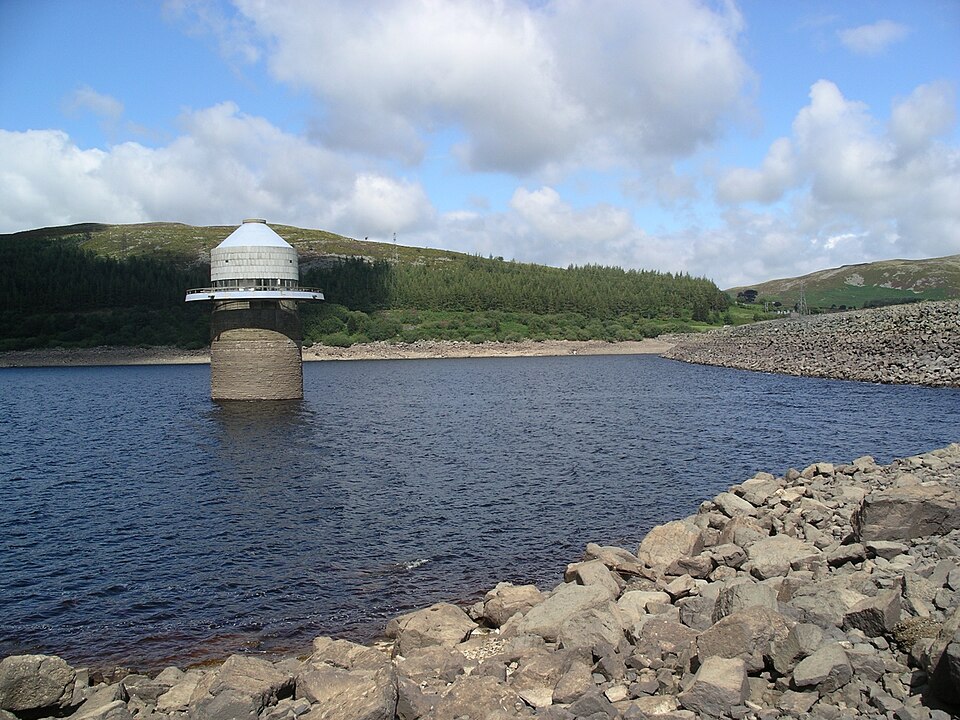
The dam was finished in August 1965 and the valley filled. The water covered the houses, the land, the school and the chapel. Only the cemetery was moved first, to higher ground. The removed headstones are in a memorial garden at the chapel.
The reservoir was opened in the last weeks of October 1965. Sources differ on whether the day was the 21st or the 28th. Representatives of Liverpool came, and so did hundreds of protesters, with a strong police presence. According to accounts of the day, the protesters cut the microphone wires and their chanting drowned the speeches, so the ceremony lasted under three minutes.
The reservoir is not just for Liverpool’s taps. It holds water that is released into the River Dee in a controlled way, so that supplies can be drawn off lower down the river. It is now managed by Dŵr Cymru Welsh Water.
Chapter 5 · 1965 to today
Remembering
A memorial chapel was built beside the reservoir in 1965, using stones from the village’s buildings. Welsh Water carried out conservation work on it from July 2020.
On 19 October 2005 Liverpool City Council formally apologised for the “insensitivity” of its predecessors. Some people in Bala welcomed it. Others called it a gesture that came forty years too late.
The best-known memorial is not in the valley. On a ruined cottage wall at Llanrhystud, beside the A487 in Ceredigion, the words “Cofiwch Dryweryn”, “Remember Tryweryn”, were painted in the early 1960s by the writer Meic Stephens. The wall has been vandalised, repainted and rebuilt many times. The first version’s spelling was not correct Welsh, and restorations have corrected it. The phrase has since been painted in more than 40 other places in Wales.
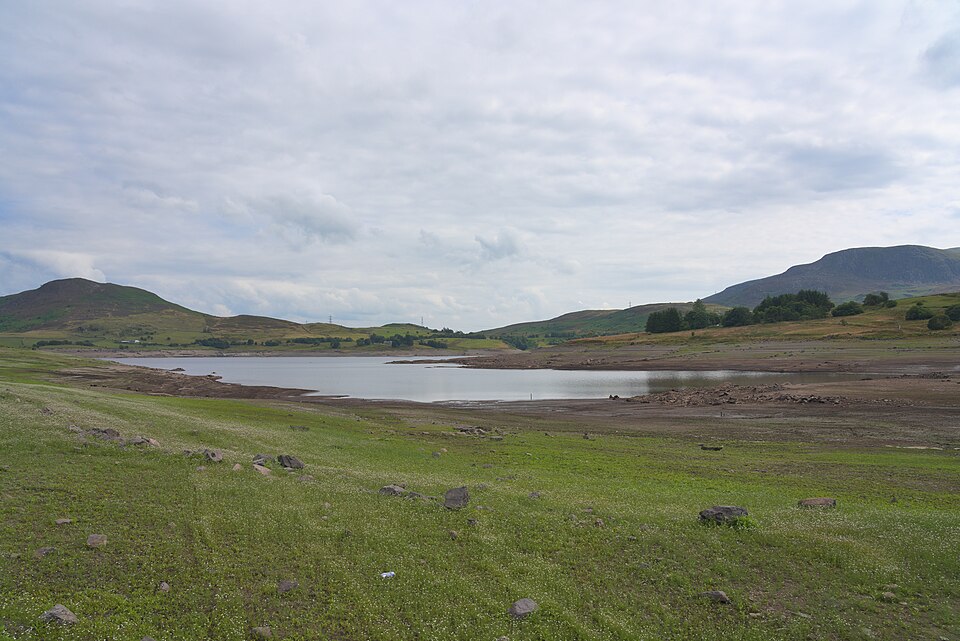
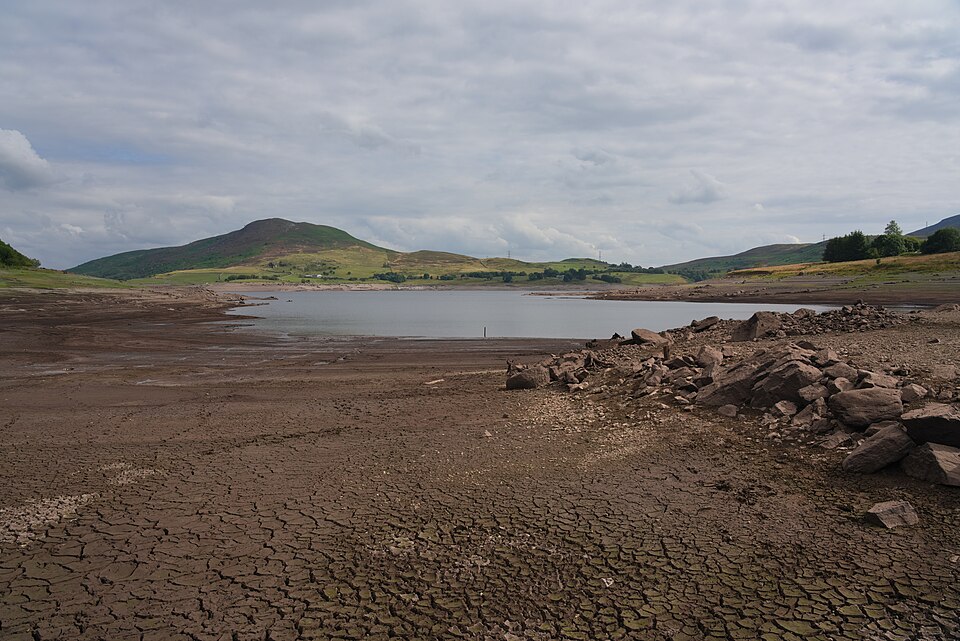
The story has also reached music and poetry: the Manic Street Preachers wrote “Ready for Drowning” about it, Enya recorded a song called “Dan y Dŵr”, and R. S. Thomas published a poem, “Reservoirs”, soon after the openings of Llyn Celyn and Llyn Clywedog. In dry summers the water in Llyn Celyn falls low enough to show tree stumps from the old valley.
Sources and credits
Every figure on this page is sourced. Every photograph is credited.
- People’s Collection Wales, Tryweryn
- National Library of Wales, Tryweryn learning resource and timeline
- Hansard, Commons, 3 July 1957, Liverpool Corporation Bill
- Westminster Hall debate, Capel Celyn Reservoir (50th Anniversary), 14 October 2015
- Natural Resources Wales, River Dee regulation leaflet
- Daily Post, Tryweryn bomber relives the night
- History Revealed, Capel Celyn flooding
- Liverpolitan, Remembering Capel Celyn
- Senedd research brief on the Cofiwch Dryweryn mural
- Cambrian News, Cofiwch Dryweryn mural restored
- Wikipedia, Tryweryn flooding; Llyn Celyn; Capel Celyn; Mudiad Amddiffyn Cymru
Photographs
- The valley in 1956: Geoff Charles, National Library of Wales, via Wikimedia Commons, CC BY-SA 4.0.
- The draw-off tower and dam, 2005: Velela, via Wikimedia Commons, public domain.
- Llyn Celyn at low water, July 2022: Satdeep Gill, via Wikimedia Commons, CC BY-SA 4.0.
- The exposed lake bed, July 2022: Satdeep Gill, via Wikimedia Commons, CC BY-SA 4.0.